

 Go to live demo
For growing manufacturers, the urgent need is clear visibility into inventory and supplier lead times, not heavyweight systems integration. When homegrown systems break down in the face of increasing sales, a purpose-built business system is needed. It is important to select a system that provides that next-level management without incurring additional complexity and cost in the process.
ERP vs MRP: Getting the Functionality You Need.
While ERP systems are often marketed as all-in-one solutions for managing operations, they’re typically built for large enterprises with complex, multi-site processes and global supply chains. ERP systems are also designed to manage the overarching aspects of the business, leaving more tactical oversight to add on modules. For SMBs, implementing an ERP system can be overkill—introducing unnecessary complexity and cost, especially when the core need is better control over day-to-day production and inventory.
In contrast, a purpose-built MRP system is designed specifically to solve these tactical challenges. MRP systems focus on real-time material planning, accurate demand forecasting, and streamlined inventory control—providing exactly the tools that growing manufacturers need to stay agile and efficient.
Below, we’ll explore why MRP systems are often a better fit for SMBs than full-scale ERP platforms and how using the right system can bring clarity, control, and confidence to your manufacturing operations.
Providing Detailed, Component-Level Planning
MRP systems are purpose-built for bill of materials (BOM)-driven environments. This is especially true in electronics, where a single product can have hundreds or thousands of components.
- MRP tracks multi-level BOMs in detail with tools expressly built for the task.
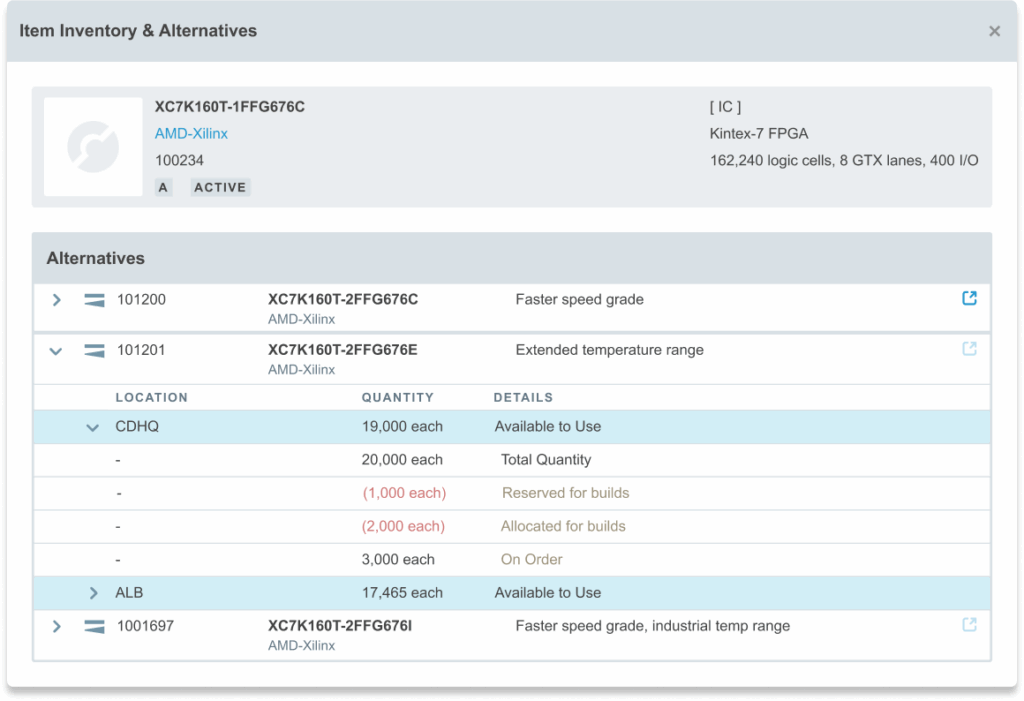
- It manages component substitutions, version changes, and alternate parts more easily than a general-purpose ERP system.
- Helps ensure exact quantities of each component are available when needed for builds.
MRP Systems are More Agile to BOM Changes
In electronics manufacturing, change is constant—new product revisions, EOL parts, and design updates. MRP systems are more agile because:
- They are built to handle frequent updates to BOMs and share those changes with other groups within the organization.
- MRP systems recalculate material needs quickly based on demand shifts or engineering changes.
- Integration with PLM tools is more common with MRP than ERP, ensuring that production and procurement changes are reflected back to the product engineering group.
MRP Systems are Focused on Production Execution
MRP systems typically provide production scheduling functionality or integrate more directly with:
- Shop floor scheduling operations to ensure builds are ready for production with the components needed to complete the job.
- Work order generation and tracking systems
- Kit availability checking before builds are scheduled
These MRP features help production teams execute efficiently on a day-to-day basis, whereas ERP systems focus more on high-level planning and accounting.
Providing Granular Inventory Control
While ERP systems provide a composite understanding of monthly or quarterly materials usage, MRP systems offer real-time visibility into:
- On-hand quantities of parts and materials
- Inventory allocations (what’s already spoken for in future builds)
- Safety stock thresholds
- Reorder points and drop dead dates
This level of inventory tracking is essential in electronics manufacturing, where stockouts can halt production and overstocks can lead to costly obsolescence.
Greater Lead Time and Procurement Scheduling Precision
Electronic parts often have long or unpredictable lead times that make them difficult to adequately manage with spreadsheets or long term inventory monitoring systems used in ERP systems. Instead, MRP systems:
- Track supplier-specific lead times per component.
- Schedule orders utilizing lead time information and production demands to avoid overstocking or stockouts.
- Factor in minimum order quantities, vendor constraints, and additional lead time buffers.
ERP systems often oversimplify these aspects or require heavy customization to handle it. This leads to greater costs and more complexity to modify the system to provide the attention needed.
ERP’s Enterprise-grade Systems Can Saddle SMBs with Unneeded Complexity and Cost
ERP systems offer a broad suite of enterprise-level functionalities that go well beyond what an MRP system is designed to handle. While MRP systems focus on the core functions of manufacturing—such as material planning, inventory control, and production scheduling—ERP systems are built to manage nearly every aspect of a business. This includes finance and accounting, human resources, customer relationship management (CRM), procurement, compliance tracking, business intelligence, and more. These systems are designed to integrate all departments into a single unified platform, enabling top-level executives to monitor operations across multiple locations, regions, or even countries.
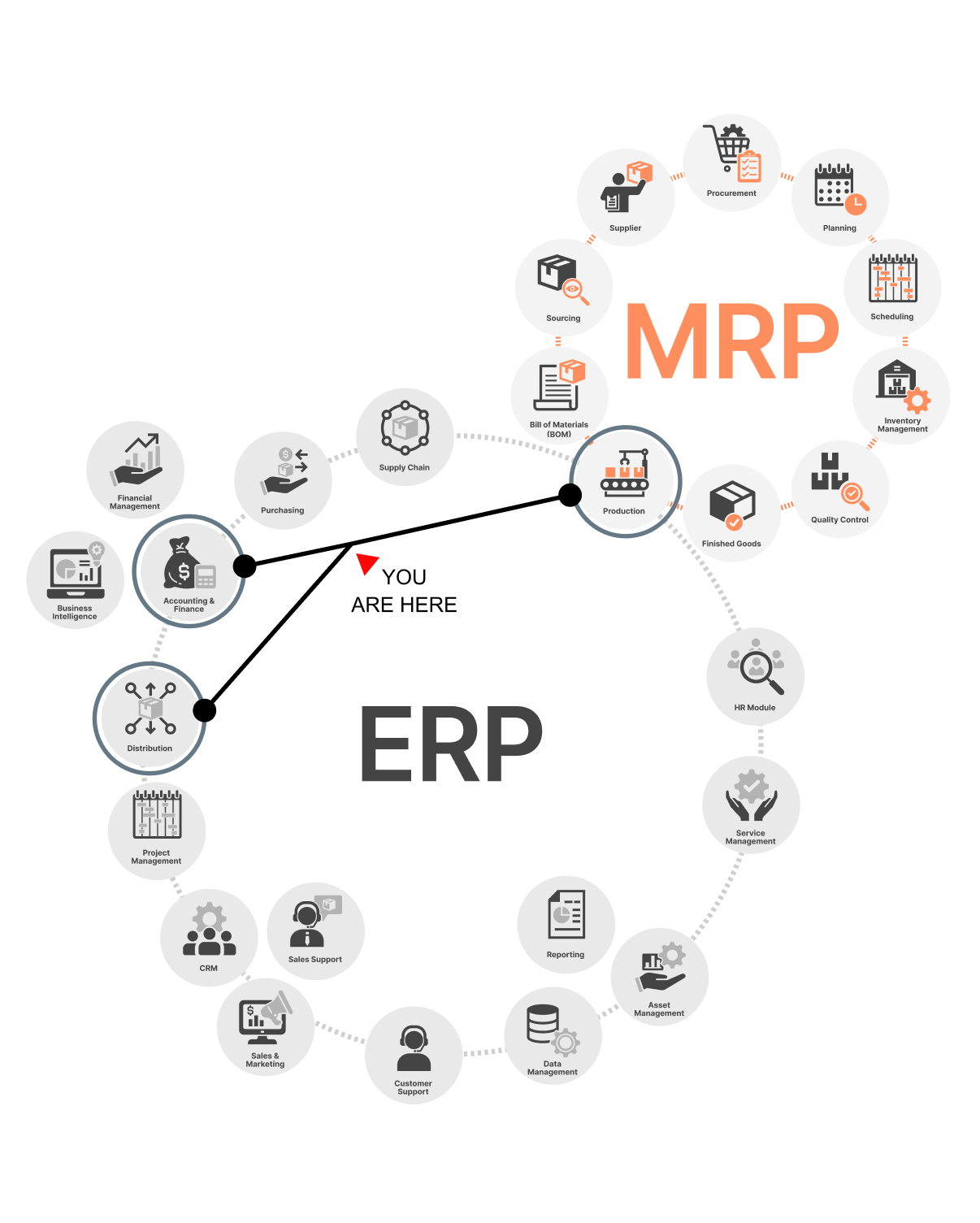
For example, an ERP system might include advanced financial tools like consolidated multi-entity accounting, tax compliance for multiple jurisdictions, and audit readiness. It may also manage complex HR needs like benefits administration, employee performance tracking, and workforce planning. Large enterprises often require these features to manage risk, maintain regulatory compliance, and streamline operations at scale. Similarly, ERP systems can support global supply chains, with capabilities to handle foreign currencies, multi-language support, and logistics coordination across continents.
However, most small and mid-sized manufacturers do not operate at a scale where these features are necessary. If your business has one or two locations, a small team, and a manageable number of vendors and customers, much of the functionality offered by an ERP system will go unused. In fact, implementing an ERP too early can create unnecessary complexity, drain IT resources, and result in poor user adoption. For SMBs, the real need is typically centered on production efficiency, materials tracking, accurate scheduling, and timely procurement—areas where a dedicated MRP system excels.
Making the Right Business System Choice
Rather than investing time and money into a sprawling ERP suite, SMBs can achieve more value by adopting a focused MRP system like Aligni MRP that directly supports their day-to-day operational needs. As the business grows and becomes more complex, additional modules or even a broader ERP integration may eventually make sense—but for most, starting with an MRP ensures a better return on investment and faster operational improvements without swimming in complexity or months of implementation investment.